
Last updated November 15, 2026
 AC repair
 Furnace & heating
 Heat pumps
 Ductless mini splits
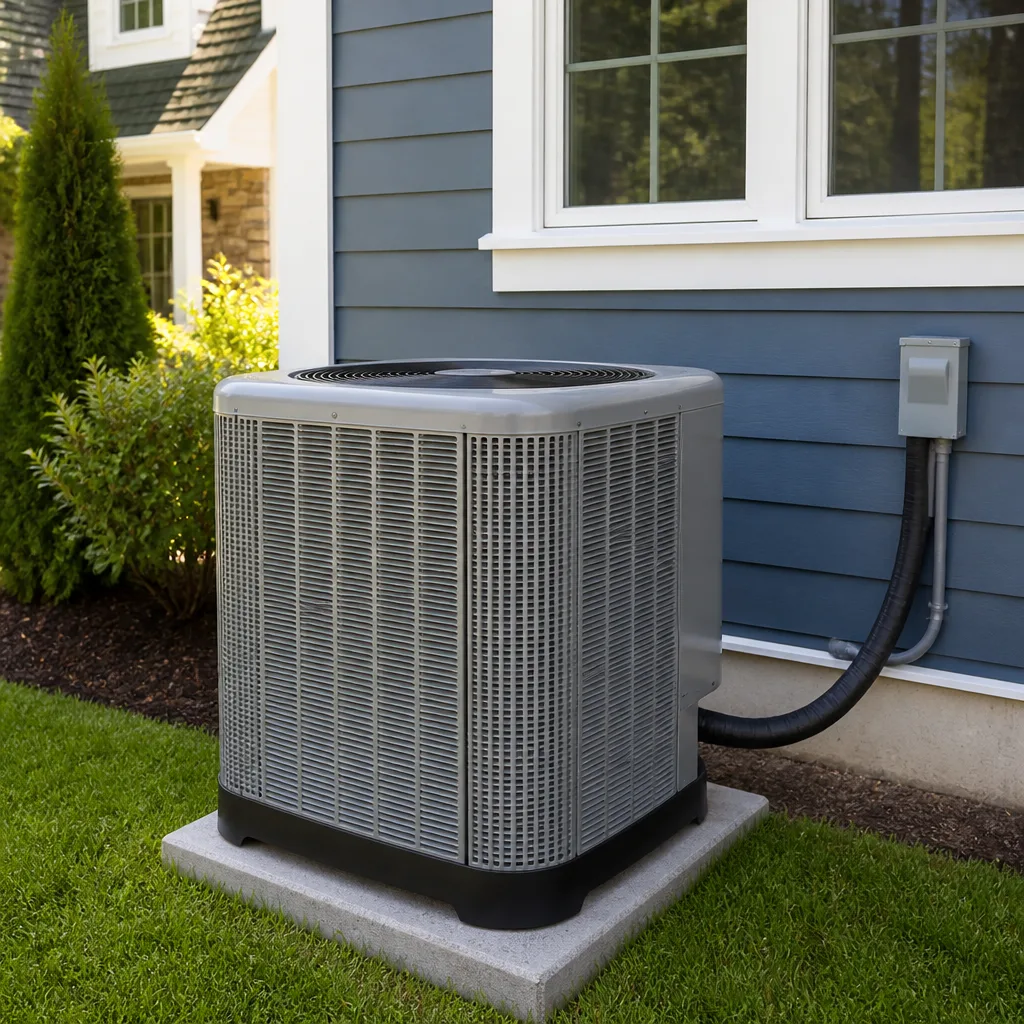 Carrier
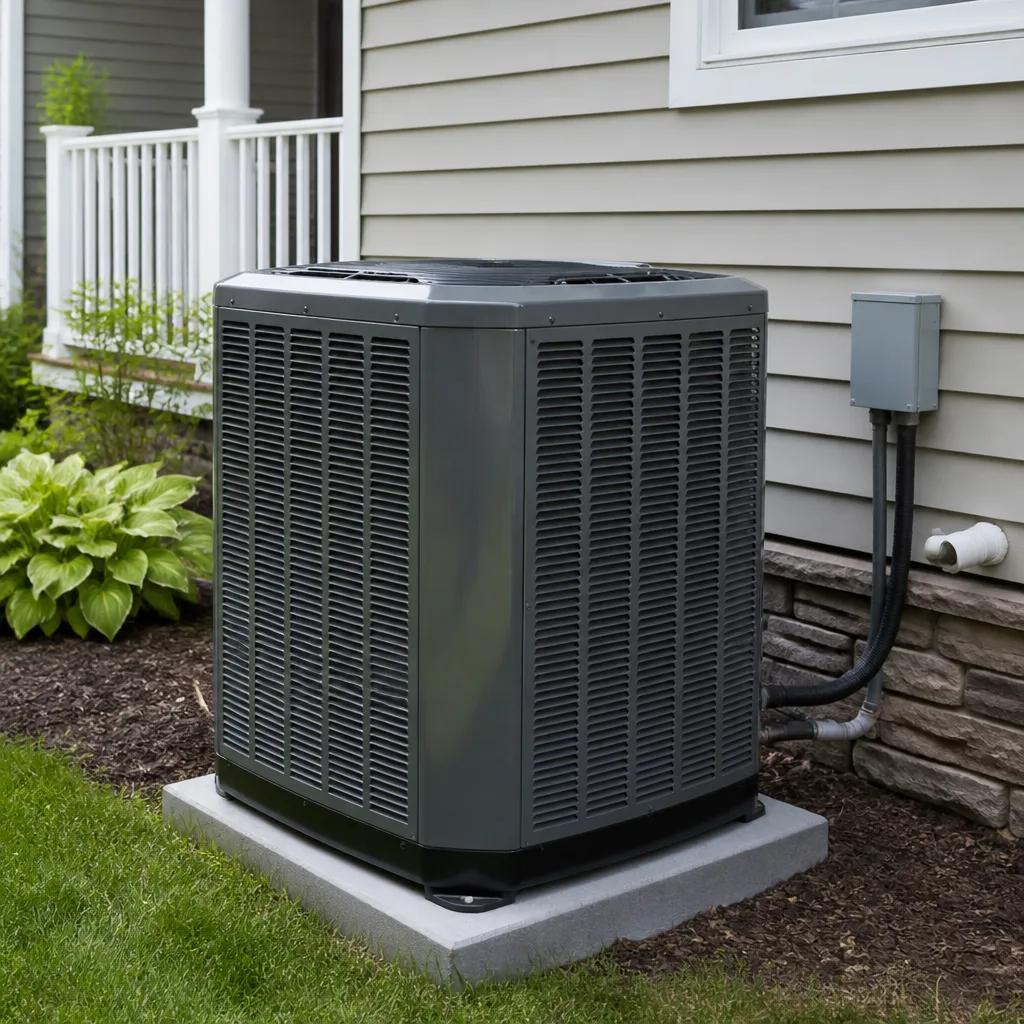 Trane
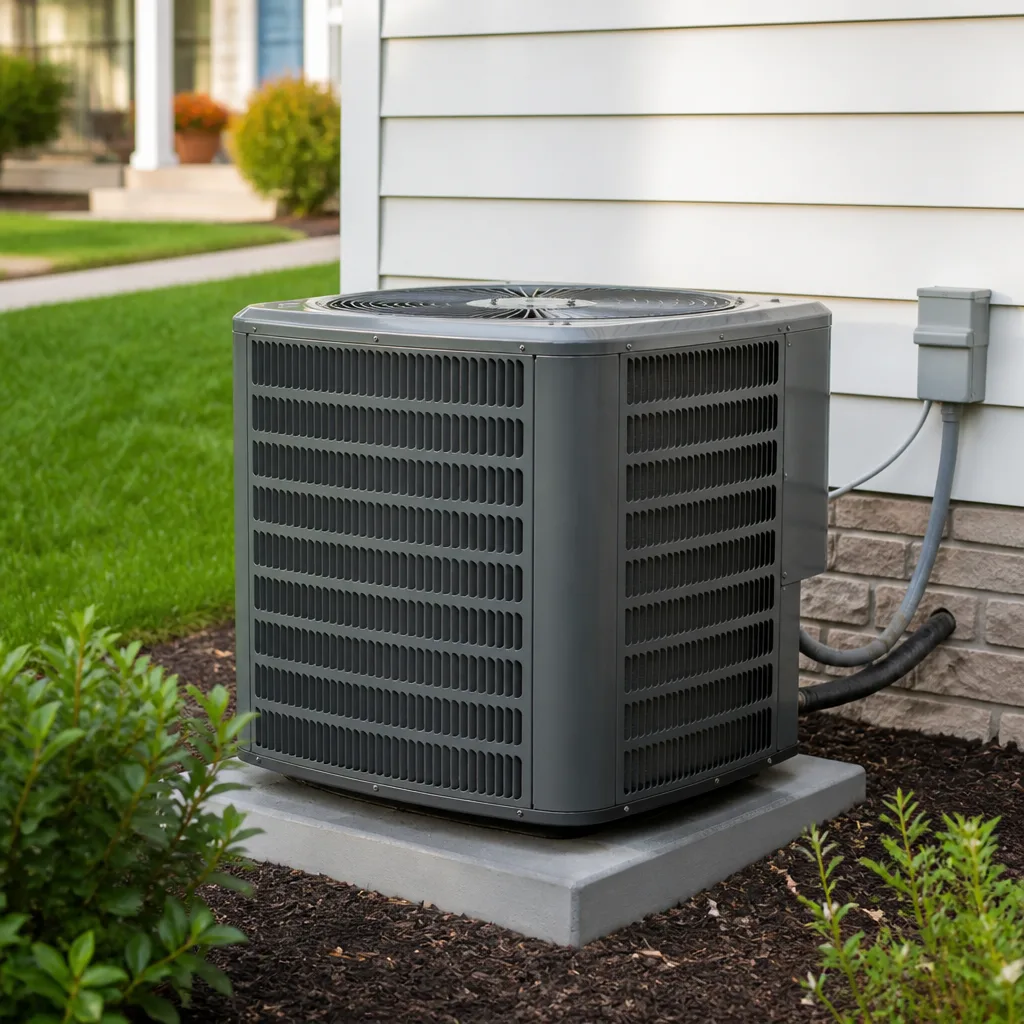 Goodman
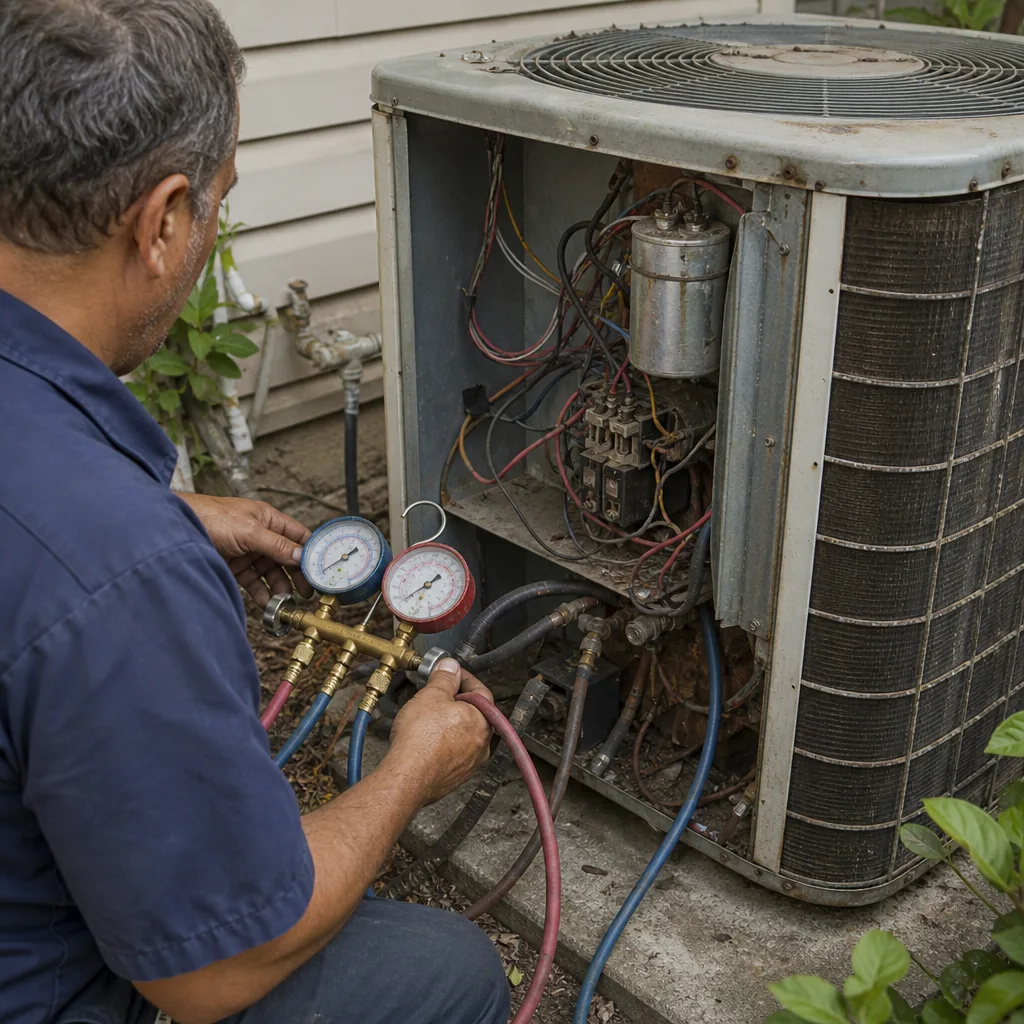
Seasonal tune-up and full diagnostic on your Carrier, Trane, or Goodman system - readings shown to you before any repair is proposed
Diagnosis first, numbers second - you approve the repair price before a single part goes in.
Get your free estimateHVAC Permits, Codes & Inspections in Port St. Lucie, FL: What You Need to Know
Most homeowners treat an HVAC permit as paperwork that happens somewhere in the background of a project. In Port St. Lucie, that assumption can cost you at the closing table. St. Lucie County sits in a high-wind region, and the building department treats air conditioning replacements accordingly: a like-for-like swap still needs a permit, and the inspection that follows checks far more than whether the unit runs. When a permit is skipped, the missing record tends to surface later, during a buyer’s inspection or an insurance review, and fixing it retroactively is slower and more expensive than filing correctly the first time. This guide explains which jobs need permits, what the inspection actually looks at, and how to check an existing system’s permit history before you buy or repair.
Quick Answer
In St. Lucie County, a full HVAC replacement (even a same-size, same-location swap) requires a building permit and inspection, while routine repairs such as replacing a capacitor, blower motor, or refrigerant component generally do not. New installations must meet Florida Building Code wind requirements for the county’s high-velocity hurricane zone, and the inspection verifies the unit, anchoring, electrical connections, and condensate handling before the job is signed off. Pull a permit and get it inspected: the record protects your insurance and your resale.
Styles & brands we work with
- AC repair
- Furnace & heating
- Heat pumps
- Ductless mini splits
- Carrier
- Trane
- Goodman
Table of Contents
- Does an HVAC replacement need a permit in Port St. Lucie?
- What Florida Building Code Section 1006 means for your installation
- What the St. Lucie County inspection actually checks
- What a failed inspection means for your timeline
- How to look up permit history on an existing Port St. Lucie home
- Homeowner-pulled permits: when they’re legal, and why we rarely advise them for HVAC
- Repair or replace? How permitting factors into the decision
- Common mistakes to avoid
Does an HVAC replacement need a permit in Port St. Lucie?
Yes. A full replacement of an air conditioning system, including a like-for-like swap where the new unit is the same size and sits in the same location, requires a permit from St. Lucie County before work begins. The common belief that “same size, same spot” is exempt is the single most frequent misunderstanding we run into in Port St. Lucie. The county draws its line at replacement versus repair, not at whether the change is visible from the street.
The distinction matters because it determines what happens with your record later. A permitted replacement produces an inspection record tied to your address. An unpermitted one produces nothing, and a future buyer’s inspector will note the missing permit.
What typically requires a permit
- Replacing a condenser, air handler, or complete split system, including a same-size swap
- Installing a new system in a home that previously had none
- Changing the type of system, such as moving from a standard split to a ducted heat pump or a ductless system
- Significant ductwork alterations, especially where the duct design or equipment location changes
- Any work involving new electrical circuits or disconnect additions for the equipment
What usually does not
Repairs fall on the other side of the line. Swapping a failed capacitor or contactor, replacing a blower motor, clearing a drain line, or recharging refrigerant after a leak repair generally does not require a permit because the system itself is not being replaced. Replacing a thermostat is also routine repair work. The important nuance: if a repair turns into a replacement mid-job, the permit requirement follows the replacement, not the original diagnosis. A good contractor will stop and file before proceeding.
Permit thresholds and fee schedules are set by the county, and rules can change. For anything that feels borderline, the safest move is to call the St. Lucie County Building Department directly and describe the job in plain terms. You’ll get an answer specific to your address and your equipment.
What Florida Building Code Section 1006 means for your installation
Florida Building Code Section 1006 addresses mechanical equipment in windborne debris regions and high-velocity hurricane zones, and St. Lucie County falls within that scope. In practice, the code requires that outdoor HVAC equipment be anchored and installed so it resists wind uplift, and it dictates how the unit is secured, how it connects to the structure, and how the connections are made. This is not abstract regulation. It’s the reason an installation here looks different from one in a calm-climate state.
What that means for a Port St. Lucie homeowner comes down to a handful of practical points:
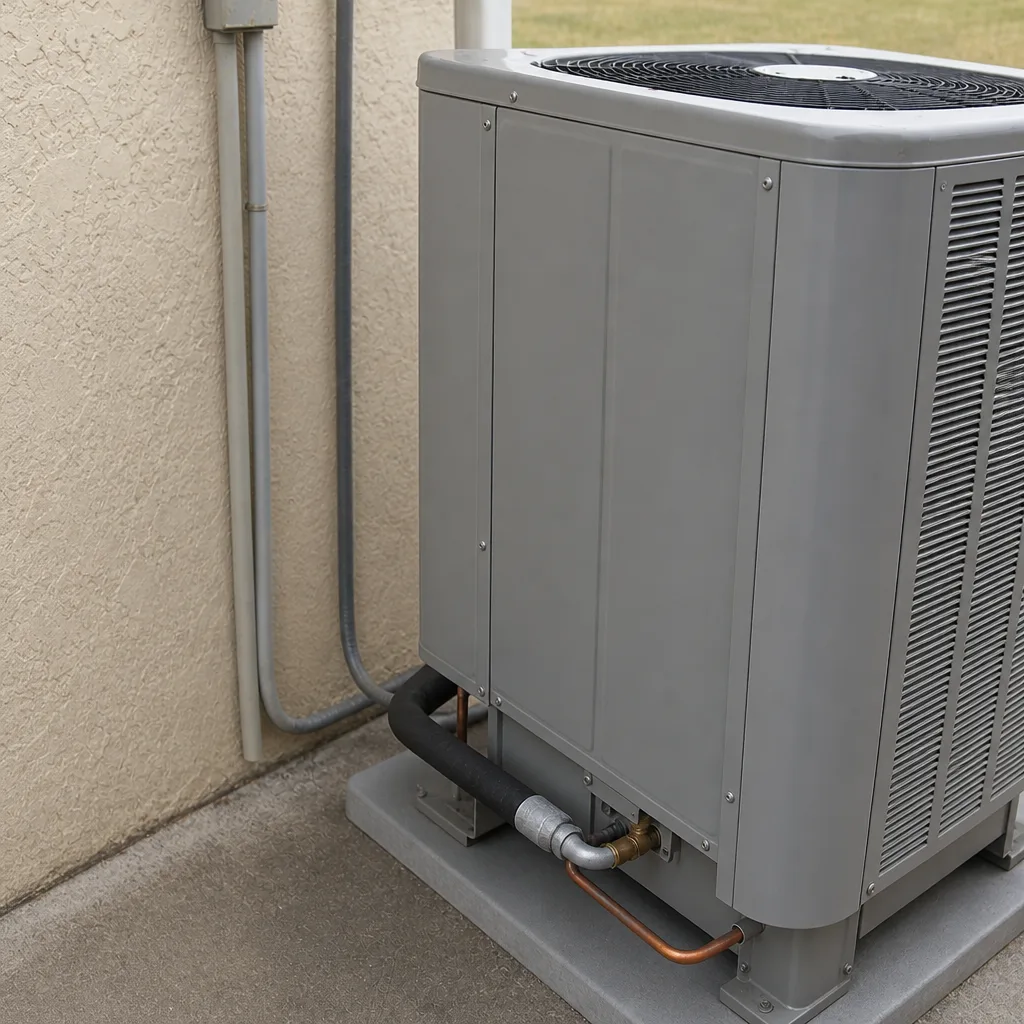
- Anchoring: The outdoor condenser must be fastened to a pad or mounting system rated to hold against wind loads appropriate to the area. Loose set-down on a pad without proper fastening can fail inspection.
- Elevation: Equipment should be installed at a height and in a manner that accounts for local flooding and drainage, keeping the unit out of standing water during heavy rain.
- Connections: Electrical disconnects, line sets, and penetrations must be sealed and secured. Open penetrations into the home are a common inspection finding.
- Labeling and clearances: Manufacturer labels must remain visible, and clearances around the equipment must allow service and air movement.
The equipment brand itself doesn’t change these requirements. A Rheem condenser, a York unit, or a Daikin system all have to meet the same anchoring and connection standard. That’s a point worth remembering: brand-specific installation quirks exist, but the wind code applies to all of them equally. If you’re midway through a replacement and want to understand how the code requirement plays out on your property, our AC installation page covers the full replacement process step by step.
What the St. Lucie County inspection actually checks
The inspection is a physical verification that the installation matches the permitted scope and the code. It’s not a performance test of your comfort level, and it’s not a warranty inspection of the contractor’s workmanship. It’s a code compliance check, and knowing what an inspector looks at helps you avoid surprises.
Here’s what typically gets reviewed on an HVAC replacement inspection in St. Lucie County:
- Permit and posted documentation. The permit card and approved plans must be available on site. The inspector verifies the installed equipment matches what was permitted, including model and capacity.
- Equipment identification. Manufacturer data plates on the condenser and air handler are checked against the permit. A different unit than the one submitted is a red flag.
- Anchoring and mounting. The outdoor unit is checked for secure fastening, correct pad or mounting, and stability under load.
- Electrical connections and disconnect. The disconnect must be present, correctly sized, and accessible. Wiring must be secured and enclosed.
- Condensate management. The drain line must route properly, terminate appropriately, and include the required trap and overflow protection where applicable.
- Penetrations and sealing. Holes through walls and slabs must be sealed against water and pest entry.
- Clearances and access. The inspector confirms service clearances around the equipment and access to the air handler.
What the inspection does not typically cover is comfort performance, refrigerant charge verification to a manufacturer spec, or duct leakage testing beyond what the permit scope requires. That means a passing inspection isn’t a guarantee of a well-tuned system. It’s a compliance check. The performance side is where a careful installer matters. We work on Carrier, Trane, Lennox, Goodman, Rheem, York, Daikin, Bryant, and American Standard equipment, and the installation standards that pass inspection are the same standards we hold across every brand.
What a failed inspection means for your timeline
A failed inspection is a delay, not a disaster, but the length of that delay depends on what failed and how quickly the correction gets made. Most failures on HVAC installations in Port St. Lucie are documentation or detail issues rather than fundamental problems: a missing disconnect, an unsupported line set, a penetrations seal that wasn’t finished, or equipment that doesn’t match the permitted model.
Here’s how the sequence usually runs:
- The inspector documents the deficiency. You or your contractor receives a written list of what failed and why.
- Your contractor performs the correction. This ranges from minutes (turning a locknut) to days (installing a correctly sized disconnect or re-anchoring equipment).
- A reinspection is scheduled. The county reinspects the corrected items, often at a reduced fee or no additional fee depending on the county’s current policy.
- The permit is finalized. Once the reinspection passes, the permit is closed, and the record becomes part of your property’s history.
A failed inspection holds up the final inspection and, in some cases, the certificate of occupancy or the ability to close the permit. That matters if you’re selling a Port St. Lucie home, because an open permit is a flag on a title search. In our experience, the practical fix is prevention: a careful contractor reviews the install against the inspection checklist before requesting the first inspection. That’s not glamorous work, but it’s the difference between a clean close and a second visit.
If a failed inspection lands mid-project and you’re not sure whether the deficiency is your responsibility to have caused or the installer’s, the county’s written finding is the document to work from. Anything ambiguous should be resolved with the inspector directly before a change order gets signed.
How to look up permit history on an existing Port St. Lucie home
You can pull the permit history of a Port St. Lucie address through St. Lucie County’s public records portal, and it’s worth doing before you buy a home, before you hire a contractor to touch an existing system, and before you put a house up for sale. The record tells you whether the system you’re about to inherit was installed legally and inspected.
Here’s the sequence we recommend:
- Gather the parcel or address information. The county’s building department portal searches by address and by parcel number. Have both ready.
- Open the building permit search. St. Lucie County maintains an online permit and records portal, and the building department can also confirm status by phone if you can’t find it online.
- Search for permits using the terms “mechanical,” “HVAC,” “air conditioning,” and “AC replacement.” Older entries may use any of these. Don’t rely on a single keyword.
- Look for the permit’s status. You want to see “finaled,” “closed,” or “complete.” An open, expired, or “issued but not finaled” permit is a flag.
- Match the equipment to the home. The permit record lists installed equipment model and capacity. Confirm it matches the units physically at the house. A mismatch is a sign of an unpermitted swap.
- Check inspection results. A finaled permit should show a passed inspection. A permit with no inspection record is one that was never verified.
If you find an unpermitted system, you’re not without options. The county can often process a retroactive permit, sometimes called an after-the-fact permit, and an inspector will come out to verify the installation. The cost and timeline for that process is set by the county, and it’s typically more involved than a pre-installation permit. Whether that’s worth pursuing is a negotiation point between a buyer and a seller, and it’s a common one in Port St. Lucie resales. If you’re the seller, having your records clean before listing avoids being asked for a retroactive permit at the worst moment. If you’re the buyer, this is the time to ask for the documents.
If you’re uncertain what the record means, or want a technician’s opinion on the physical equipment, our guide to Port St. Lucie service and the local market might help frame your questions before you call.
Homeowner-pulled permits: when they’re legal, and why we rarely advise them for HVAC
Florida allows a homeowner to pull a permit for work on their own residence, and in some cases a homeowner can act as their own contractor for the work. It’s legal. For HVAC work, though, it’s rarely advisable, and the reason is less about legality than about accountability and follow-through.
Here’s why we steer homeowners away from pulling an HVAC permit themselves:
- You take on the inspection risk. When a homeowner pulls the permit, the homeowner also owns the inspection outcome, the reinspection if it fails, and any correction required. Contractors who pull their own permits absorb that responsibility.
- The inspection reviews the installer’s work, and you’re the one on site. If the anchor isn’t rated or the disconnect isn’t sized, you’re the one the inspector has to talk to, not the installer.
- The permit’s insurance implications follow the record. An unpermitted system can complicate an insurance claim if the failure traces back to installation. A permitted, inspected job keeps the record clean.
- Warranty claims can be affected. Manufacturer warranties and labor warranties can both be tied to a documented, permitted installation. A homeowner-pulled permit leaves gaps in that paperwork.
- Resale. A homeowner-pulled permit is a legitimate record, but it doesn’t carry the contractor’s name in the same way a contractor-pulled permit does. Buyers and inspectors notice the difference.
Where homeowner permits do make sense is small, low-risk projects outside HVAC: a fence, a small shed, some accessory structures. For a full HVAC replacement, the job involves refrigerant handling, high-voltage electrical, and wind-rated anchoring. It’s not a weekend project, and it’s not a paperwork project either. When the county inspector arrives, the questions are technical, and the answers need to come from the person who did the work.
Repair or replace? How permitting factors into the decision
Whether to repair or replace an older system is usually framed as a cost question. It’s also a permitting question, and that changes the math. A repair generally doesn’t require a permit. A replacement does, and the permit adds a line to the project: a filed permit, an inspection visit, and the paperwork that goes with both. It’s not a large line, but it belongs in the comparison.
The way we frame the decision for Port St. Lucie homeowners:
- Age and refrigerant transition. Systems built around older refrigerants face shrinking supply and rising service costs. When repairs start stacking up, the permit and inspection costs of replacement become a small part of the total picture.
- Part availability. A ten-year-old unit from a brand that has changed platforms can have replacement parts on back order. That’s a repair with an uncertain timeline; it’s also a hint about where the system is heading.
- Efficiency and comfort. A replacement lets you resize and re-match equipment to the house. A repair restores what’s there. If the home has a comfort complaint (hot rooms, uneven cooling), a replacement is the moment to correct it.
- The record. A replacement produces a clean permit and inspection record. A repair doesn’t produce one, but that’s usually fine because the system hasn’t changed.
We’ll tell you which path makes sense for your situation, and we don’t push one over the other. That’s the benefit of covering both repair and installation: we can look at the same system from either angle without a quota to hit.
If you’re trying to decide right now, our AC repair page covers what a repair looks like and what it involves, and it’s a reasonable place to start before you decide.
Common Mistakes to Avoid
- Assuming a like-for-like swap doesn’t need a permit. It does. St. Lucie County requires a permit for replacement even when the new equipment matches the old in size and location. Filing it is much cheaper than discovering the gap later.
- Skipping the permit-history check before buying. Buyers in Port St. Lucie routinely find the last system was installed without a permit. If you don’t check the county record before closing, you’re the one who discovers it, and the seller holds the cards.
- Letting a contractor skip the inspection “because it’s small.” Any permitted job has an inspection attached. If a contractor offers to skip the inspection and “handle it later,” find another contractor.
- Confusing a repair with a replacement mid-job. When a diagnosis of “replace the motor” becomes “replace the whole system,” the permit requirement changes. Insist on a written scope and a filed permit before work moves forward.
- Pulling the permit yourself for a full HVAC replacement. It’s legal, but you inherit the inspection risk, the correction responsibility, and the paperwork gap. Let the contractor hold the permit.
- Ignoring the wind code on anchoring. In St. Lucie County, the anchoring and fastening requirements under Florida Building Code Section 1006 are not optional. A unit set on a pad without proper fastening can fail inspection and, worse, fail in a storm.
- Assuming a passing inspection means a well-tuned system. The inspection verifies code compliance. It doesn’t guarantee proper refrigerant charge, duct sealing, or comfort. Ask your installer how the system’s performance is verified after install.
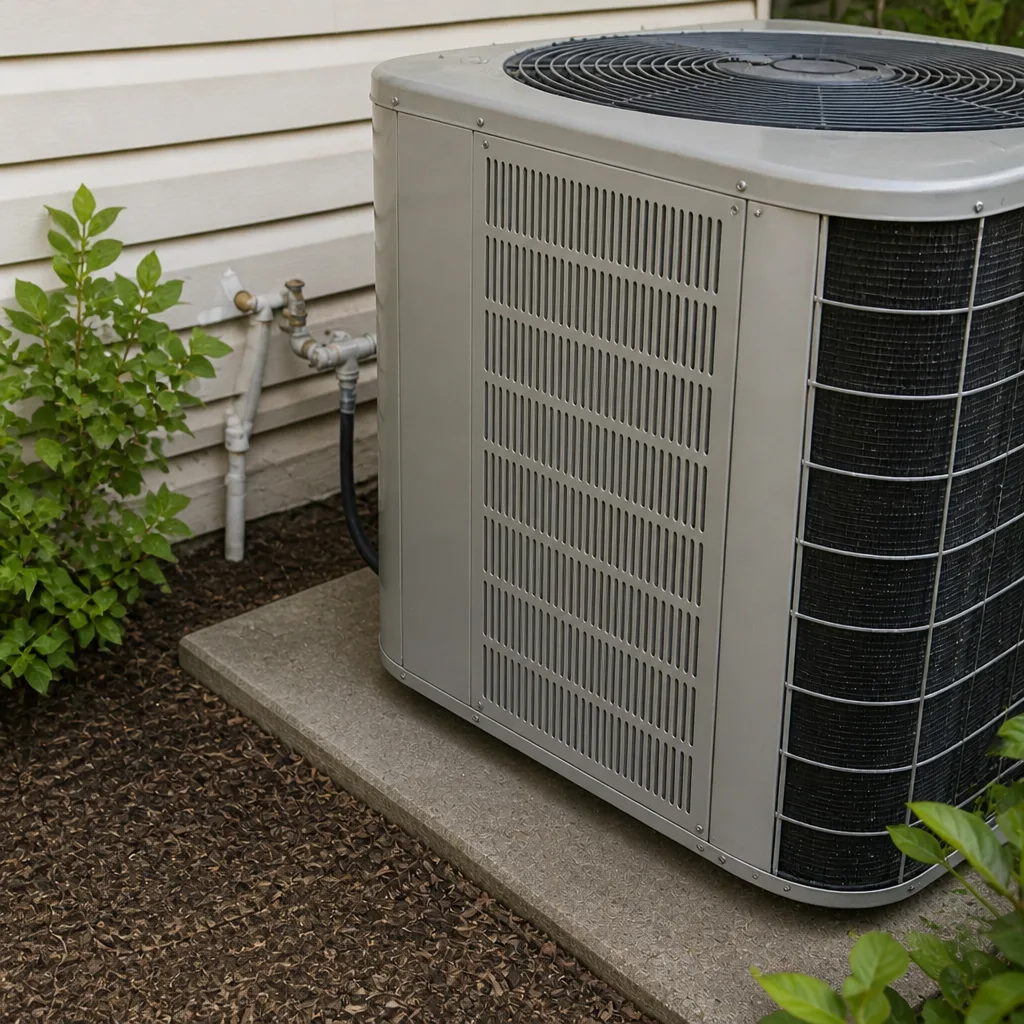
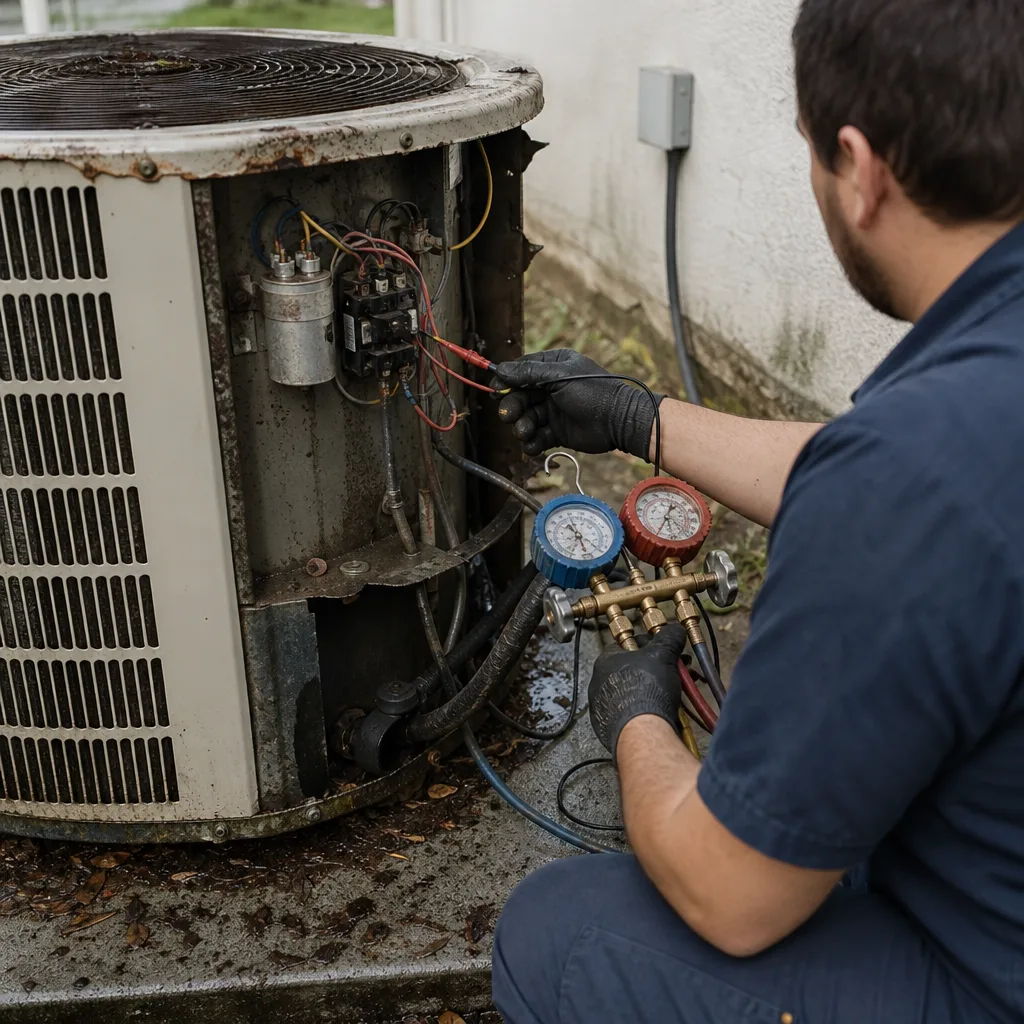
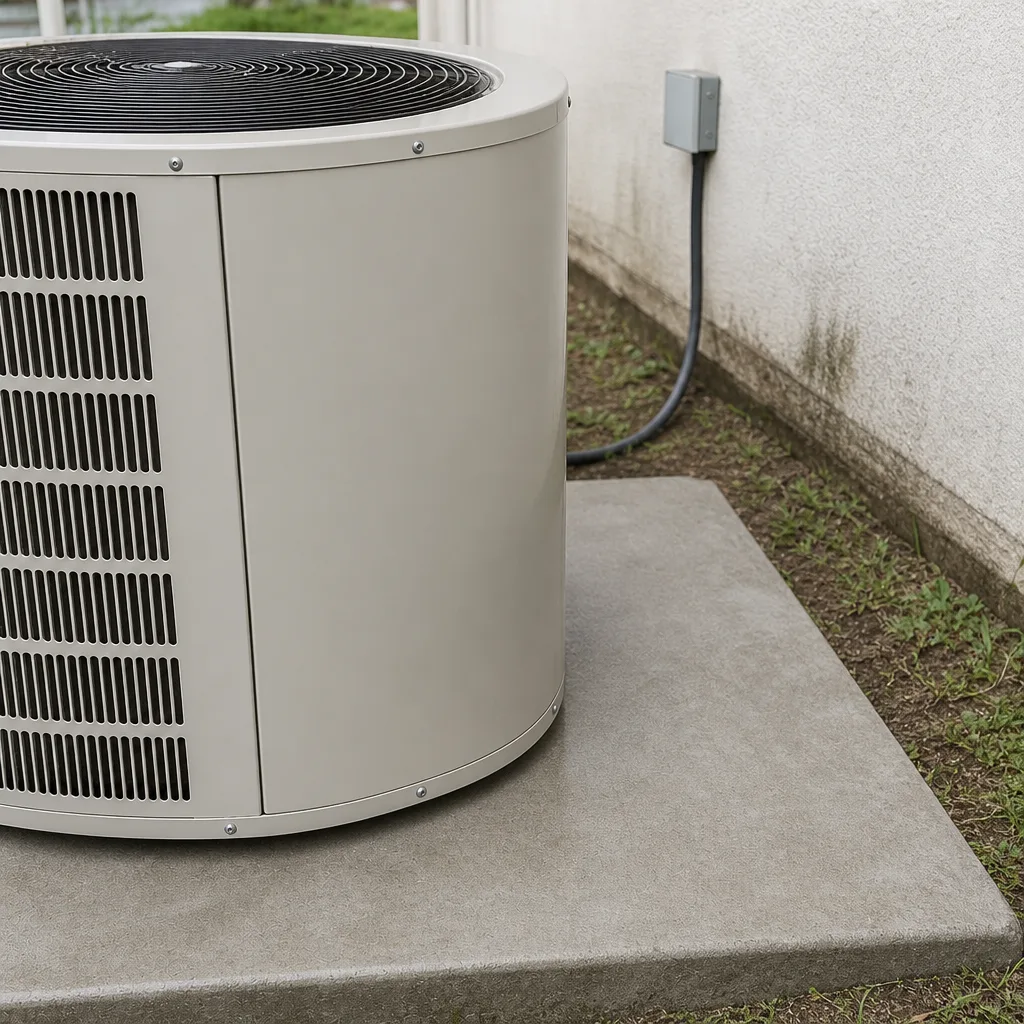
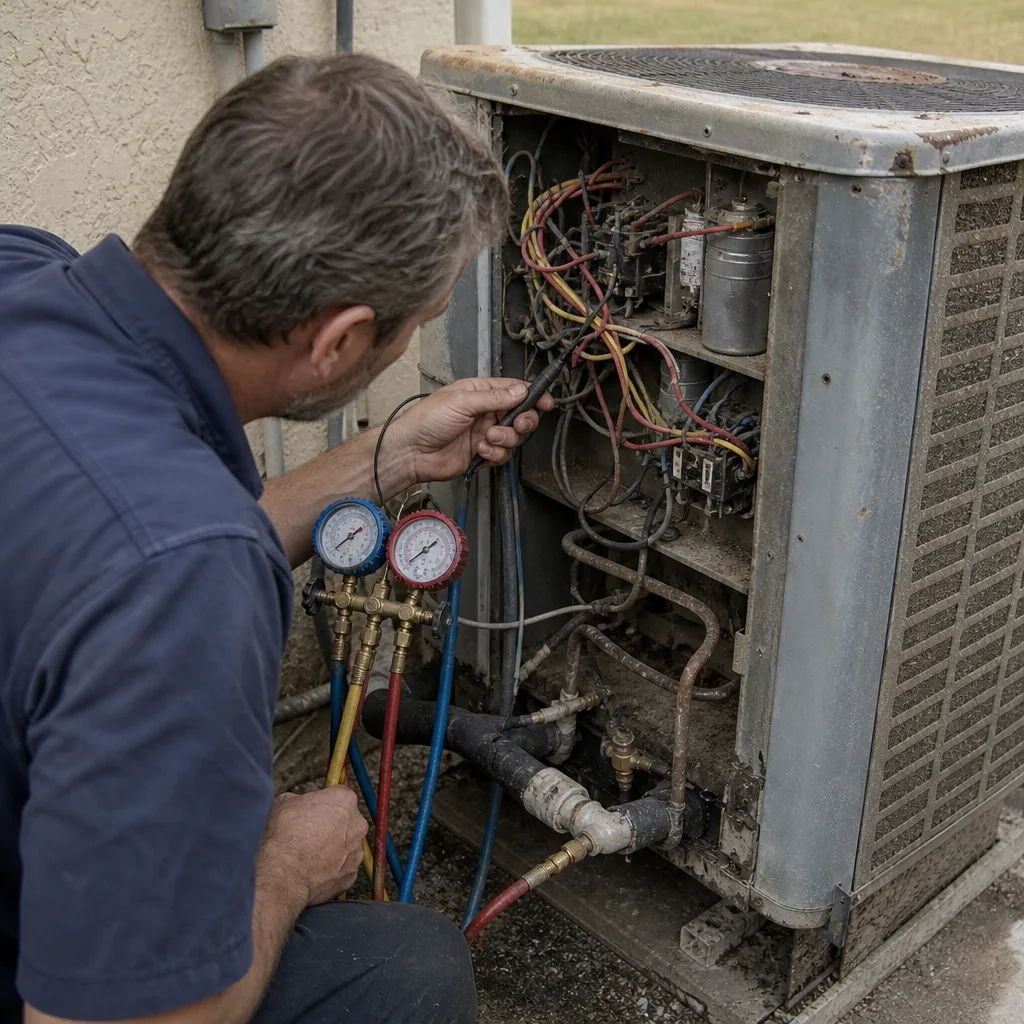
See the difference
 Before
 After
 Before
 After
 Before
 After
When to Call a Professional
Call a professional when the job involves anything beyond a routine repair. Specifically: any full HVAC replacement, any system change (a heat pump where a standard split used to be, or a ductless system in a home that had ducted), any significant ductwork alteration, and any job where the existing system’s permit history is unclear. Those are the moments when the permit, the code, and the inspection all come into play, and they’re not good candidates for homeowner work.
Bring us in earlier rather than later. We can look at your system, tell you whether the work ahead needs a permit, and walk the process to final inspection. Dayspring AC Repair offers free estimates in Port St. Lucie. Call (833) 659-7543.
Frequently Asked Questions
Yes. A full AC replacement in St. Lucie County requires a building permit and inspection, even if the new unit is the same size and sits in the same location. The permit protects your insurance coverage and your resale, so filing it is not optional bureaucracy; it’s part of the job. Call (833) 659-7543 for a free estimate.
Timelines vary by the county’s current workload and by the completeness of the permit application, so we won’t give you a specific number that might not hold. What we can tell you is that the application process is faster when the plans are accurate the first time, and the inspection is scheduled after the installation. Your contractor should give you the expected schedule in writing before work begins. For questions about a specific job, call (833) 659-7543.
The buyer’s inspector will likely flag the missing permit, and it surfaces during the transaction, often late. The typical resolution is either a retroactive permit with the county or, in some cases, negotiation over the cost. It’s almost always more expensive and slower than having pulled the permit at the time of installation. If you’re unsure about a system you own, check the county’s public records before you list. Call (833) 659-7543 to look at the physical equipment.
Usually not. Repairs such as replacing a capacitor, contactor, blower motor, or thermostat, clearing a drain line, or recharging refrigerant after a leak repair generally don’t require a permit because the system is not being replaced. If a repair becomes a replacement, the permit requirement applies to the replacement. Call (833) 659-7543 if you’re unsure which category your job falls into.
Florida does allow homeowners to pull permits for work on their own residence, so it’s legal. We rarely advise it for HVAC work specifically, because the homeowner inherits the inspection risk, the correction responsibility if a failed inspection occurs, and gaps in manufacturer and labor warranty paperwork. Most homeowners are better off letting a licensed contractor hold the permit. Call (833) 659-7543 for a free estimate on your project.
Any code-compliant HVAC equipment is permitted, regardless of brand, as long as it’s installed per the approved plans and meets the wind and anchoring requirements of the county’s high-velocity hurricane zone. We work across the major brands, including Rheem, York, Daikin, and Bryant, so a brand preference doesn’t rule out a permitted installation. Call (833) 659-7543 to talk through your system.
The Bottom Line
A permit in St. Lucie County is a small line of paperwork that carries an outsized record. It’s what lets an inspector confirm the install meets the wind code, what keeps your insurance from finding a gap later, and what a buyer’s inspector looks for when you sell a Port St. Lucie home. The pattern we see most often is homeowners who believe a like-for-like swap is exempt, installers who skip the filing, and a discovery that happens at the worst possible moment. Pull the permit. Get the inspection. Keep the record. If you’re facing a repair or replacement and want an honest read on the job ahead, our Dayspring AC Repair team is glad to help. Call (833) 659-7543. We answer 24/7, with fast dispatch from 7am to 7pm, Sunday through Friday.
Written by the team at Dayspring AC Repair.