
Last updated November 15, 2026
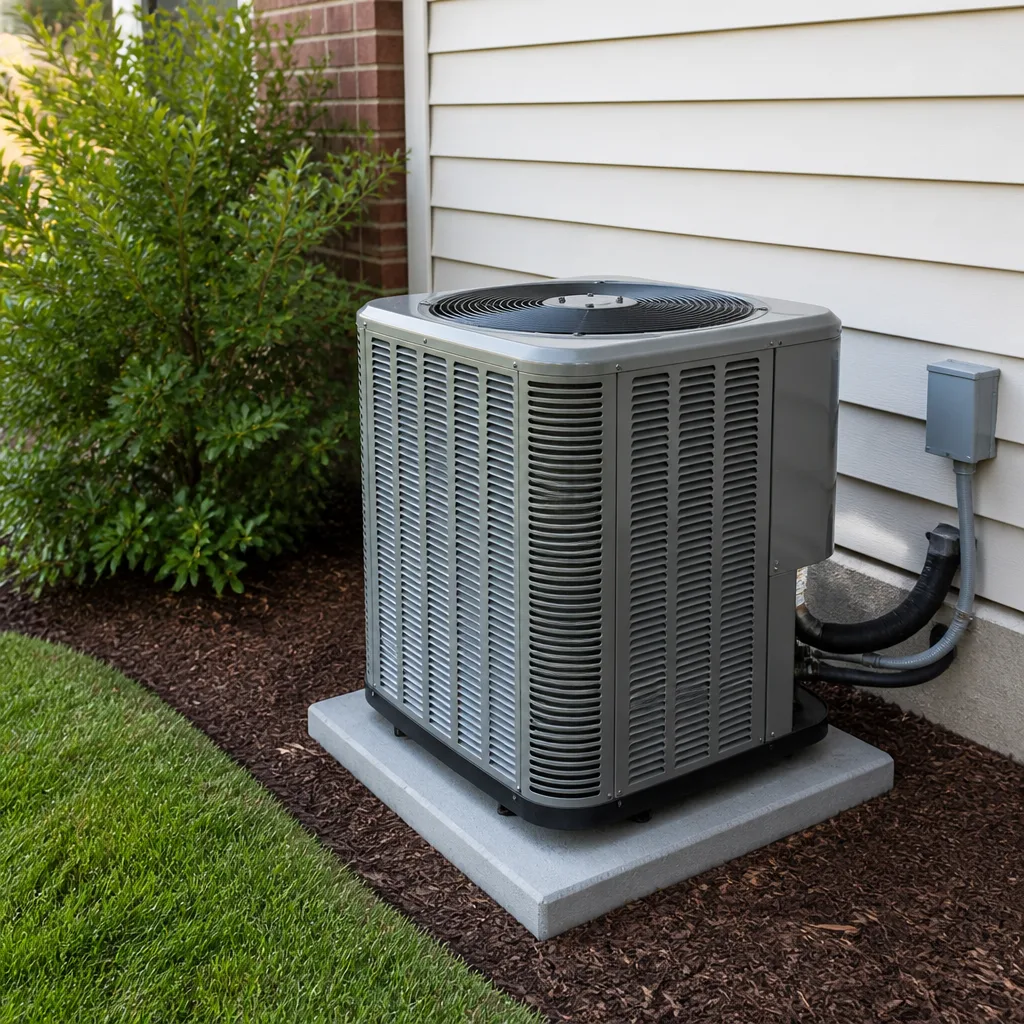 AC repair
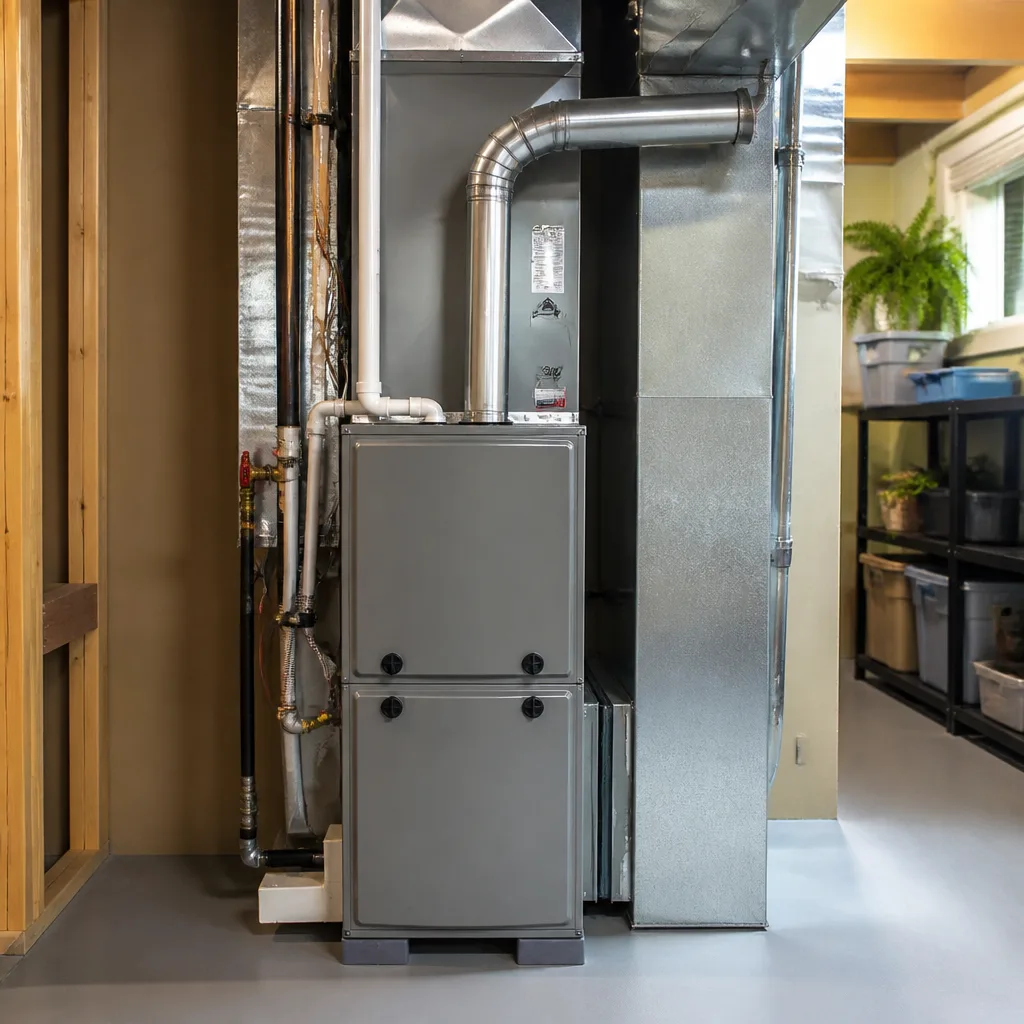 Furnace & heating
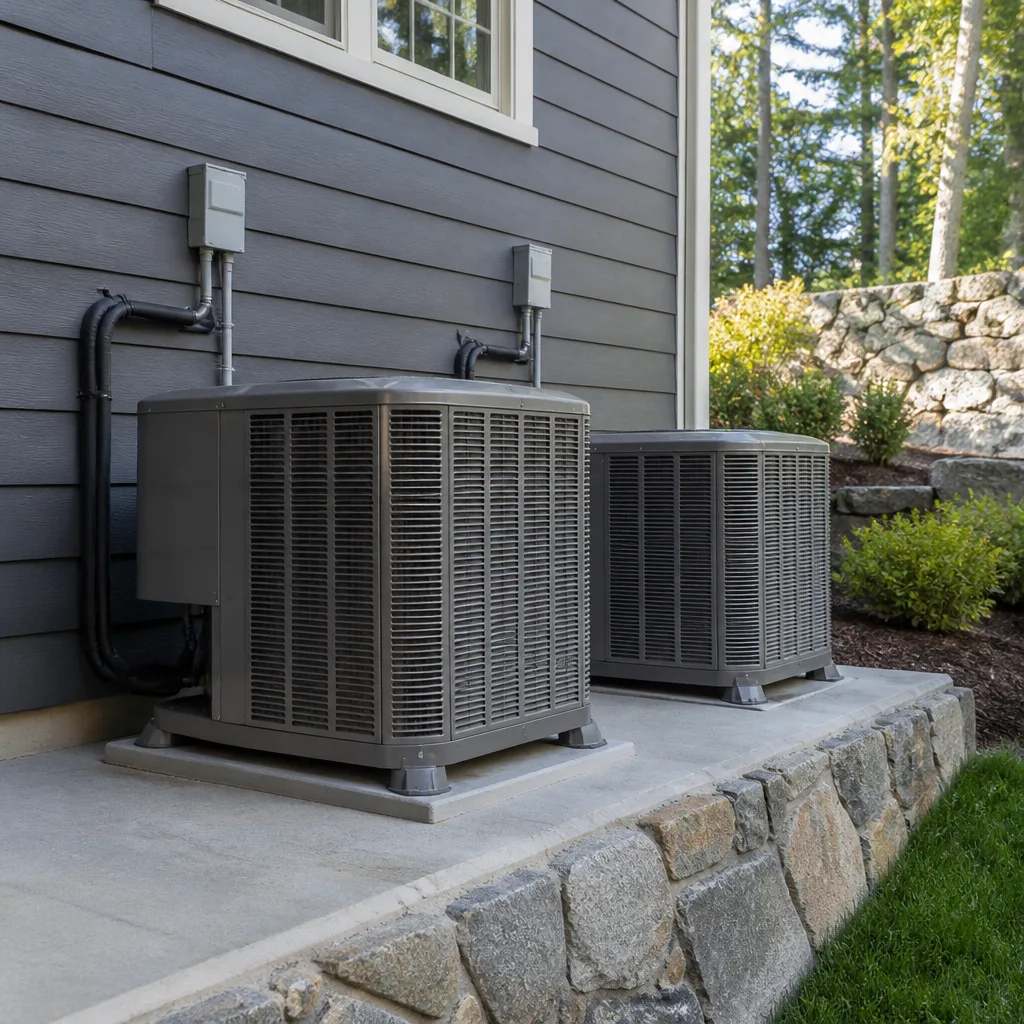 Heat pumps
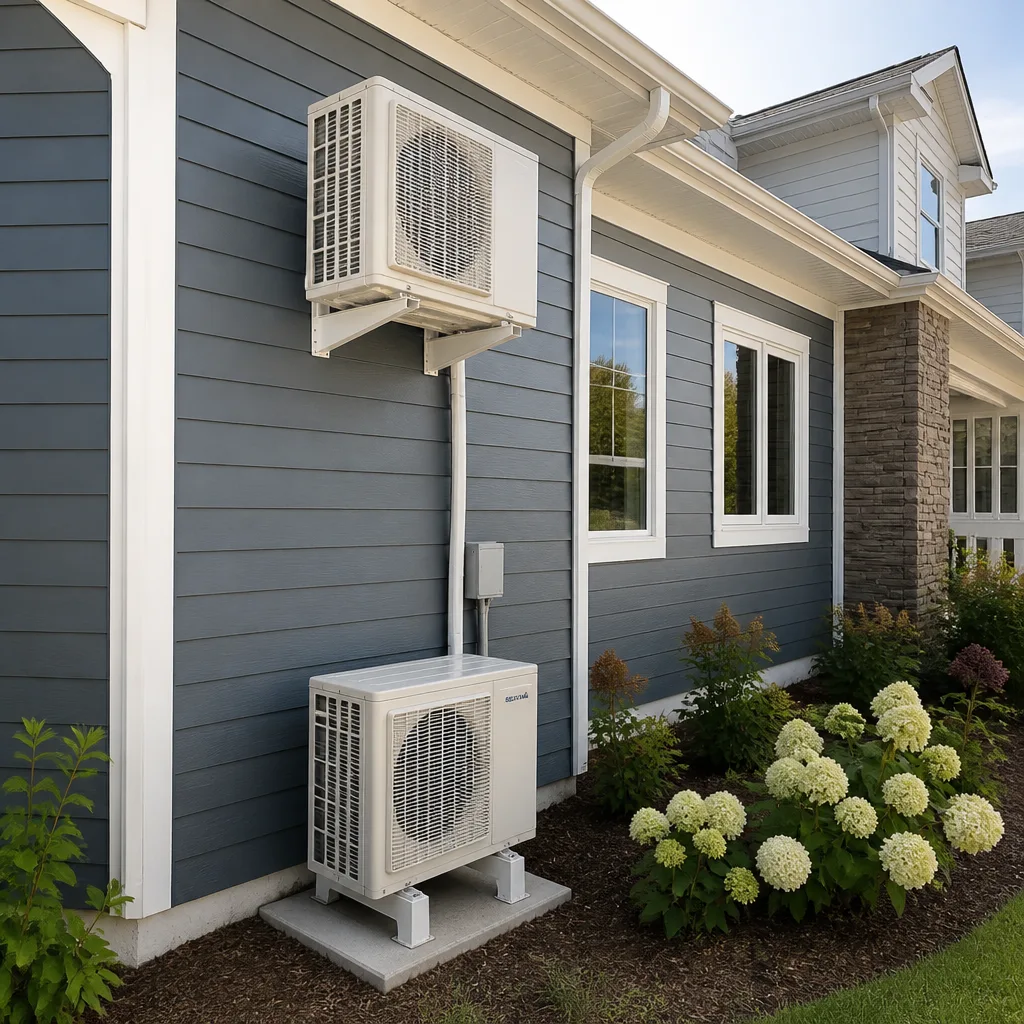 Ductless mini splits
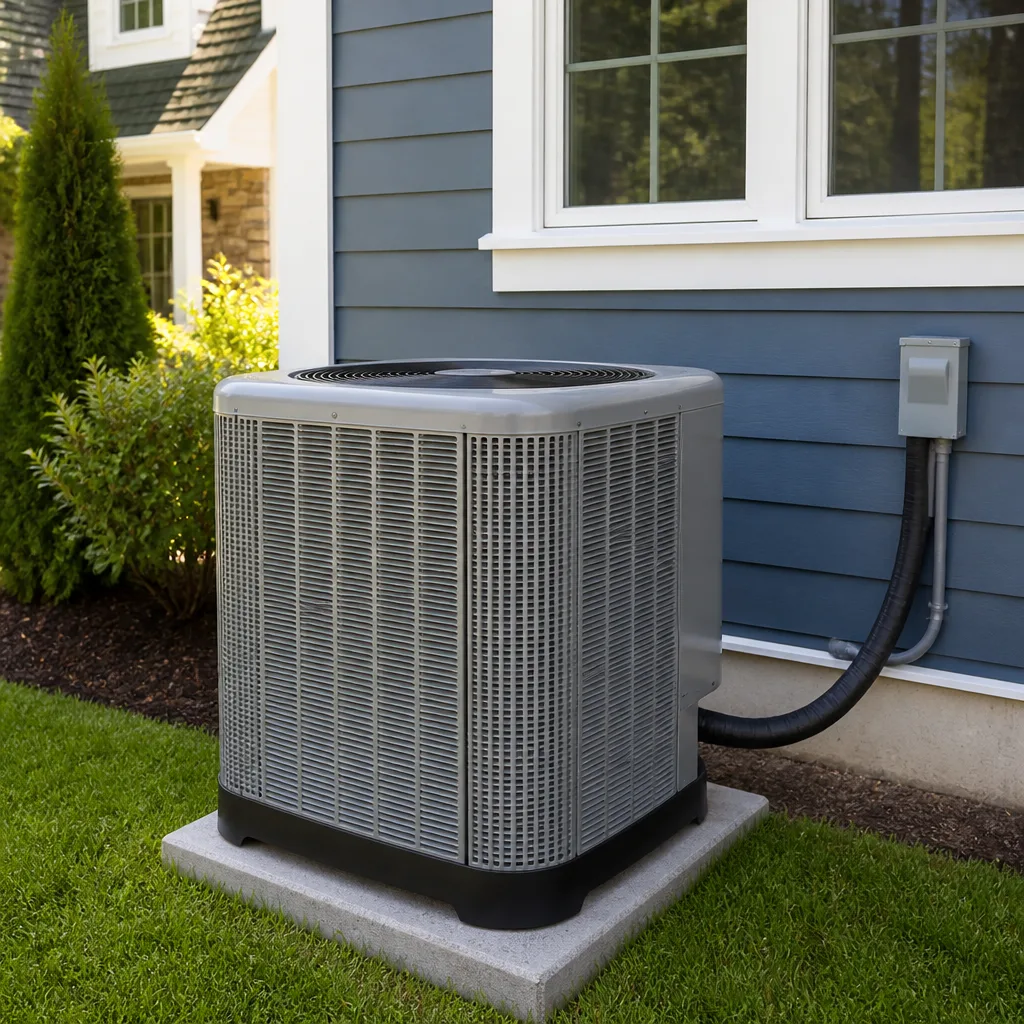 Carrier
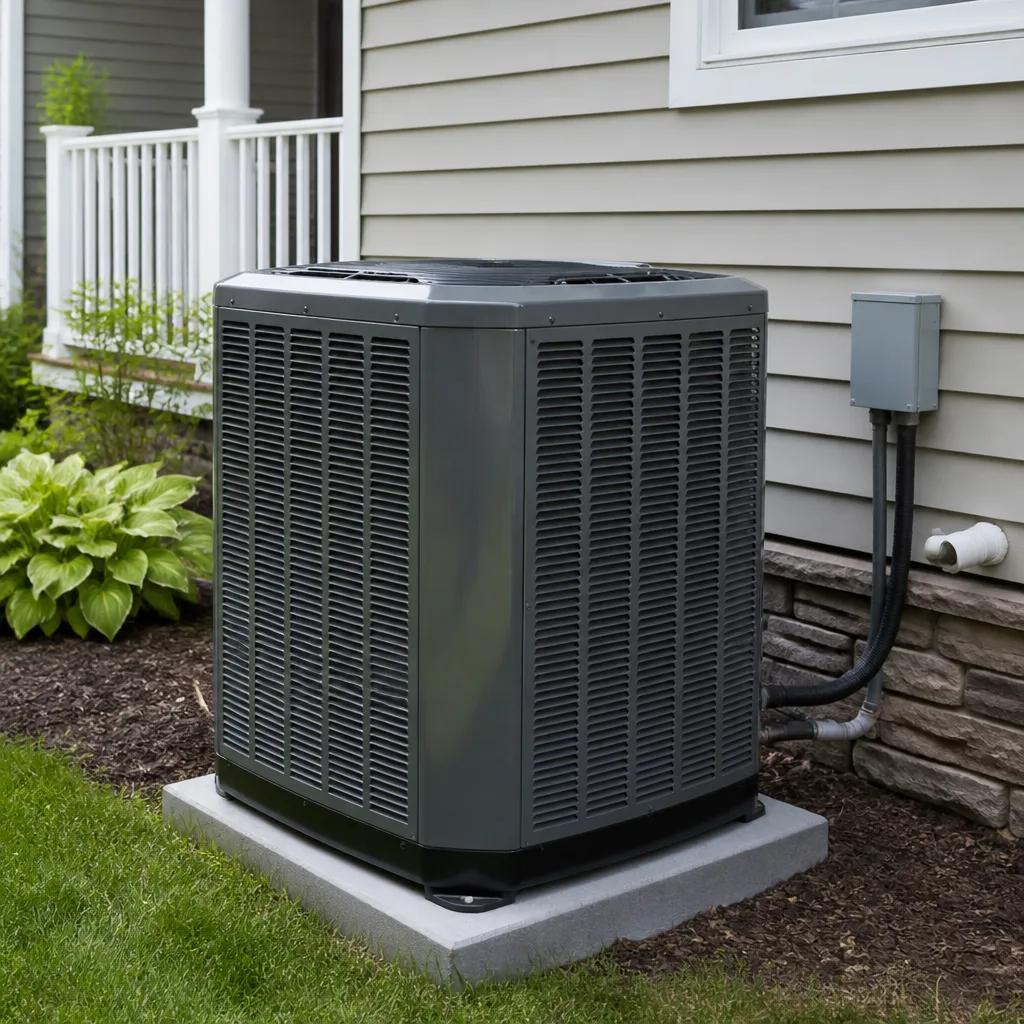 Trane
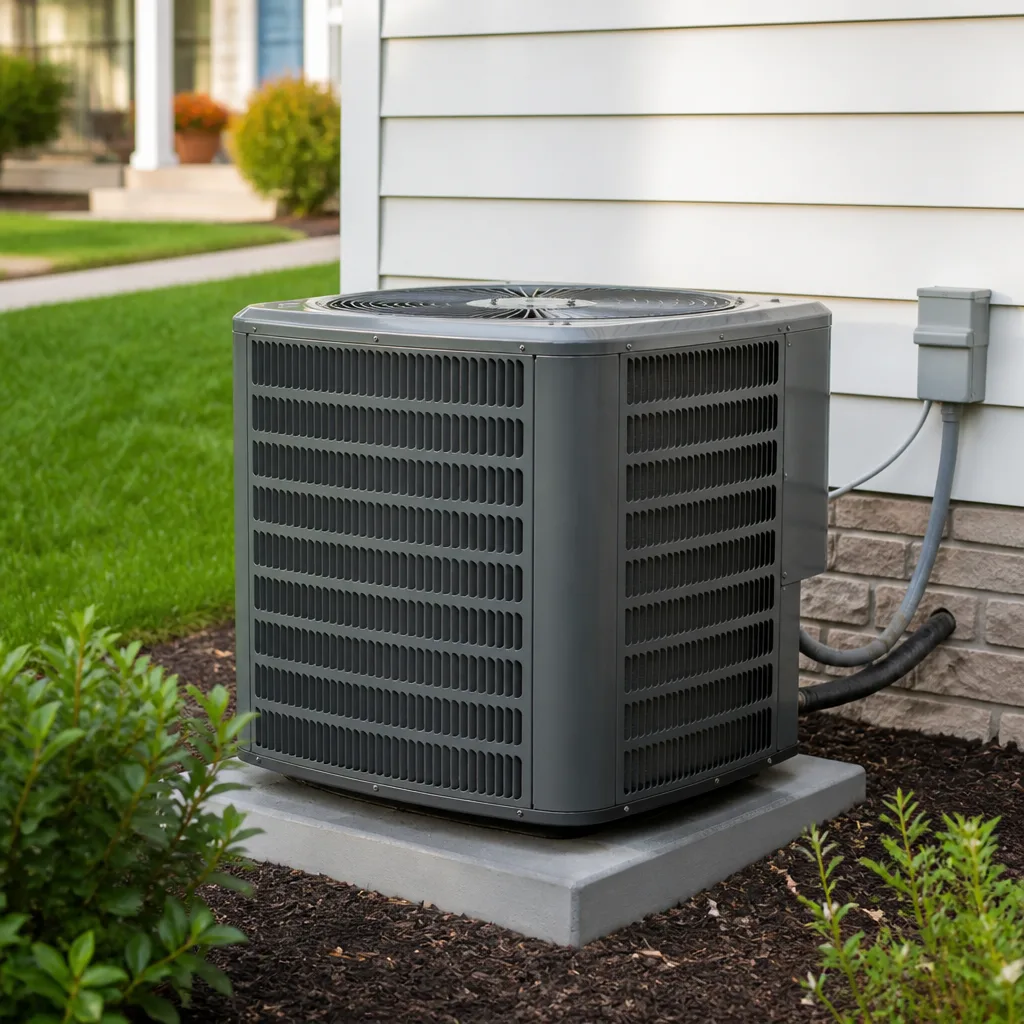 Goodman
Seasonal tune-up and full diagnostic on your Carrier, Trane, or Goodman system - readings shown to you before any repair is proposed
Diagnosis first, numbers second - you approve the repair price before a single part goes in.
Get your free estimateAC Repair Troubleshooting in Port St. Lucie: Common Problems and How to Fix Them
If your AC is running constantly but the house won’t cool below 78°F on a July afternoon, the problem probably isn’t your thermostat setting. After five or more years of Florida runtime, four specific failure modes account for most cooling complaints in Port St. Lucie: low refrigerant charge, restricted airflow, a clogged condensate drain, and a failing capacitor or contactor. This guide walks you through reading each symptom, deciding what you can safely check yourself, and knowing the exact point to stop and call a technician. By the end you’ll be able to describe what’s happening in plain language, which makes the first service visit diagnostic instead of exploratory.
Quick Answer
When a Port St. Lucie AC stops cooling properly, the most common causes are low refrigerant, a dirty evaporator coil or filter, a clogged condensate drain line, and electrical failure at the capacitor or contactor. Homeowners can safely reset the thermostat, change the filter, clear the outdoor unit of debris, and check the breaker. Anything involving refrigerant, the evaporator coil, or live electrical components needs a licensed technician. Free estimates are available by calling (833) 659-7543.
Styles & brands we work with
- AC repair
- Furnace & heating
- Heat pumps
- Ductless mini splits
- Carrier
- Trane
- Goodman
Table of Contents
- Symptom Map: What Your System Is Telling You
- Warm Air From the Vents
- Ice on the Lines: Why a Frozen Coil in Summer Means Refrigerant or Airflow
- Short Cycling and Constant Running
- Water Leaks and the Drain Line Shutoff
- Loud Noises and What They Point To
- What You Can Safely Check vs. What Needs a Technician
- How to Describe Symptoms So the First Visit Is Diagnostic
- Common Misdiagnoses That Cost You Parts
- Common Mistakes to Avoid
- When to Call a Professional
- Frequently Asked Questions
Symptom Map: What Your System Is Telling You
An air conditioner doesn’t fail all at once. It fails in stages, and each stage leaves a symptom you can observe without opening a panel. In Port St. Lucie, where systems run long hours through a hot, humid summer, those stages compress: a small problem that would take a season to surface in a milder climate can show up within a few weeks here. Reading the symptom correctly the first time is what separates a small repair from a large one.
Here’s how the most common complaints map to likely causes in a Florida-climate system:
- Warm air from the vents, compressor running: low refrigerant charge or a failing capacitor.
- Ice on the copper lines or the indoor coil: low refrigerant, restricted airflow, or a dirty evaporator coil.
- System starts and stops every few minutes: an oversized system, a thermostat placement problem, or a refrigerant charge issue.
- Runs constantly, house never reaches setpoint: heat load exceeding capacity, duct leakage, or a dirty condenser coil.
- Water pooling near the indoor unit: a clogged condensate drain, which triggers the float switch shutoff.
- Buzzing, clicking, or grinding: electrical component failure or a mechanical problem at the blower or fan motor.
Our technicians have up to 9 years of experience reading these patterns across the equipment most Port St. Lucie homes already have, from Lennox and Goodman to Rheem and York. That matters because the failure modes differ slightly by brand and by how the system was installed. You can reach our team through Dayspring AC Repair for a free estimate on any of the problems below.
Warm Air From the Vents
Warm air from the supply registers while the outdoor unit is running is the single most common call we get. The cause is usually one of three things: the compressor isn’t running (electrical), the system is low on refrigerant (charge), or the air moving through the coil isn’t being conditioned properly (airflow). Each one is diagnosed differently, and guessing at the wrong one wastes money.
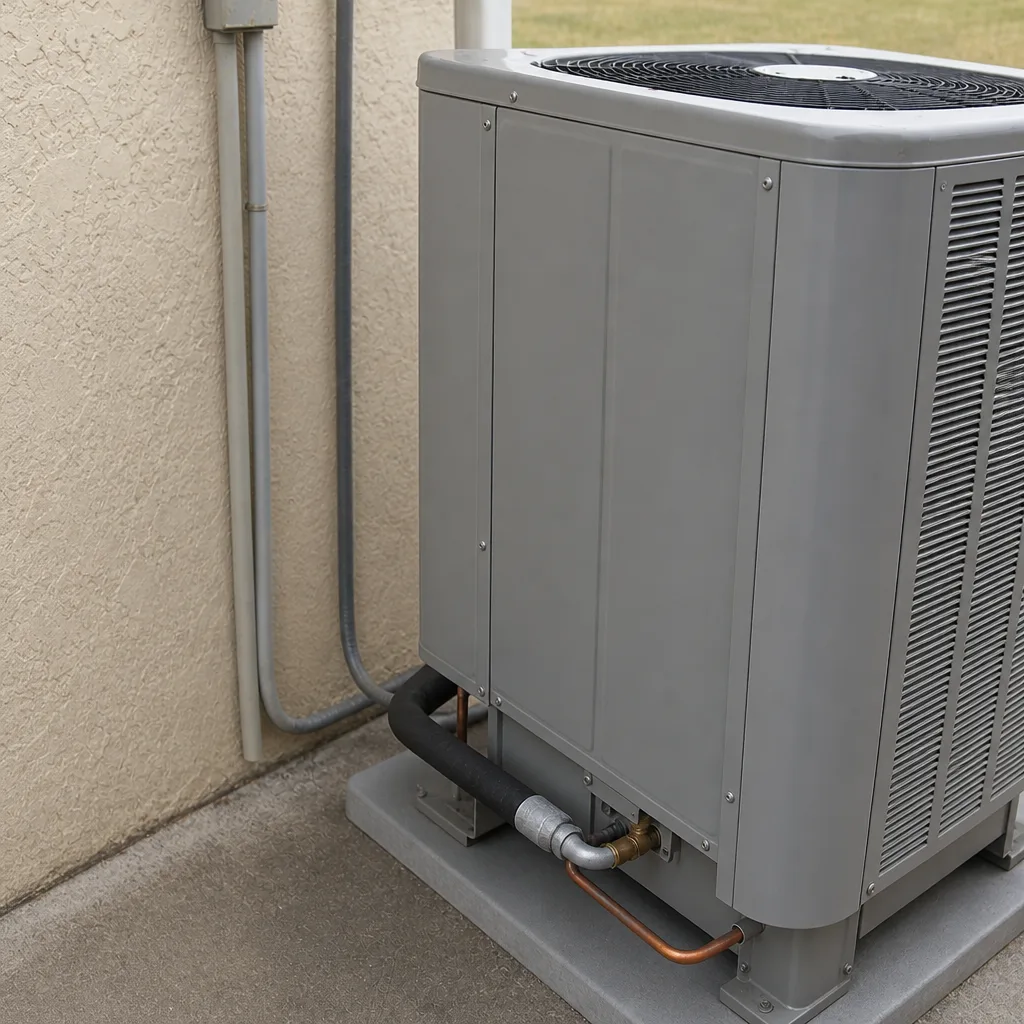
Start with the outdoor unit. If the fan on top is spinning but you hear no compressor hum, the problem is very likely electrical – a capacitor, contactor, or the breaker. If the fan isn’t spinning at all, check the breaker first. If both are running normally and the air is still warm, you’re most likely looking at a refrigerant charge issue, and that’s where you stop and call.
A few things you can safely confirm before calling:
- Confirm the thermostat is set to COOL and the fan is set to AUTO, not ON.
- Change the air filter if it’s visibly loaded with dust. A clogged filter restricts airflow and mimics a charge problem.
- Check the outdoor disconnect box and the main breaker panel for a tripped breaker.
- Clear leaves, grass clippings, and debris from around the outdoor condenser so it can reject heat.
- Check that no supply registers are closed or blocked by furniture.
If all five check out and the air is still warm, the system needs a set of gauges and an electrical meter. Call us for AC repair and we’ll come out with both.
Ice on the Lines: Why a Frozen Coil in Summer Means Refrigerant or Airflow
Ice on the copper refrigerant lines in July sounds like a contradiction. It isn’t. A frozen evaporator coil in summer is a sign that the coil is running below the freezing point of the moisture in the air, which usually points to one of two problems: the system is low on refrigerant, or not enough air is moving across the coil. Both cause the coil temperature to drop lower than it should, and the result is a block of ice where the coil should be absorbing heat.
This distinction matters for the repair bill. A frozen coil from a dirty filter or a blocked return is an airflow fix – relatively inexpensive. A frozen coil from a low refrigerant charge is a leak diagnosis, a repair, and a recharge, which is a much larger repair. The mistake homeowners make is turning the system off, letting the ice melt, and turning it back on without finding out which one it was. It’ll freeze again within a day or two, and every freeze cycle stresses the compressor.
When you see ice on the lines:
- Turn the system off at the thermostat. Don’t run it while it’s frozen.
- Change the filter and check all return grilles for blockage.
- Let the ice melt completely, which can take several hours.
- Restart and observe. If it freezes again within a day, stop and call.
Refrigerant work requires a license and special equipment, so we won’t walk you through it here. A technician needs to find the leak, repair it if repairable, and recharge to the correct weight. Our team handles this on the major brands, including Lennox, Goodman, and York systems common in Port St. Lucie homes.
Short Cycling and Constant Running
Short cycling – the system starts, runs a few minutes, shuts off, and starts again – is the opposite complaint from “runs constantly,” and both point at different problems. Short cycling is often a thermostat issue, an oversized system relative to the home’s heat load, or a refrigerant charge that’s off enough to trip a safety. Constant running usually means the system is working as hard as it can and still losing the battle against heat and humidity.
In Port St. Lucie, constant running in July and August is often not a failure at all. It may be that the system is properly sized for a typical summer and simply can’t keep up with a stretch of unusually hot, humid days plus a house with lots of west-facing glass. But if the house is at 80°F when the thermostat is set to 74°F, and the same thing happened without complaint five summers ago, something has changed. That’s the signal to have it looked at.
The most common causes of short cycling:
- Thermostat in a bad location: near a supply register, in direct sun, or on an exterior wall.
- Low refrigerant charge: the system hits a low-pressure limit and shuts off to protect itself.
- Oversized system: cools fast, satisfies the thermostat, then restarts quickly – common with replacement equipment sized by square footage instead of a load calculation.
- Failing capacitor: the compressor or fan tries to start and can’t, trips a limit, and tries again.
Short cycling is hard on a compressor. It’s worth a diagnostic visit before small electrical faults become a compressor replacement, and that’s exactly the kind of call we help Port St. Lucie homeowners sort out. You can read more about our full AC repair process if you want to understand what the visit covers.
Water Leaks and the Drain Line Shutoff
Water pooling around the indoor air handler is one of the most misunderstood symptoms in the trade, and it’s the one that leads to the most unnecessary part replacements. A modern Florida system has a float switch in the condensate drain pan. When the drain line clogs – and in a humid climate it will eventually – the pan fills, the float rises, and the switch cuts power to the system to prevent water damage. The result looks exactly like a dead thermostat, a failed capacitor, or a tripped breaker: the system won’t turn on.
This is where the misdiagnosis happens. A technician who doesn’t check the float switch first may replace a perfectly good capacitor, and the system still won’t run because the float is still tripped. The fix was a drain line clearing all along. We see this pattern often in Port St. Lucie, where the combination of heat, humidity, and long run times produces a steady flow of condensate through a small PVC drain that’s easy for algae and dust to clog.
What you can safely check at the indoor unit:
- Locate the condensate drain pan and look for standing water.
- Look for the float switch, usually a small plastic device attached to the pan edge or in the drain line.
- If the pan is full, don’t keep resetting the system. The float is doing its job.
- Check the drain line where it exits the house – if you can see the end, confirm it’s dripping when the system runs (it should be).
Clearing the line is sometimes as simple as flushing it, sometimes it requires a tech with a drain clearing tool to do it without making a mess. Either way, it’s a repair AC installation won’t fix – the drain needs to be cleared before anything is replaced.
Loud Noises and What They Point To
The noise an AC makes is often the clearest diagnostic clue. A system that has developed a new, louder, or different sound is telling you something mechanical or electrical has changed. Here’s how to interpret what you’re hearing in a typical Port St. Lucie home system.
- Buzzing from the outdoor unit: a failing contactor, capacitor, or loose electrical connection. Stop the system and call – buzzing near electrical components is a safety issue.
- Clicking at the outdoor unit: the contactor pulling in and dropping out, often from a capacitor that’s borderline or a low-voltage control issue.
- Grinding or screeching: a bearing in the condenser fan motor or the indoor blower motor. These usually don’t fail silently – they fail loudly, and the fix is a motor replacement.
- Rattling at the outdoor unit: loose panels, debris against the condenser, or a failing compressor mount.
- Hissing or bubbling at the refrigerant lines: a refrigerant leak in progress. This one needs a technician promptly because running the system low on charge damages the compressor.
Don’t ignore a new noise in the hope it settles. Electrical buzzing and mechanical grinding both tend to get worse, and the second visit costs more than the first would have. For any noise that sounds electrical or like a bearing failing, turn the system off at the thermostat and call for AC repair.
What You Can Safely Check vs. What Needs a Technician
Part of the value of reading your own symptoms is knowing when to stop. Some checks are safe for any homeowner: changing a filter, resetting a breaker, clearing debris around the outdoor unit, checking that a float switch has tripped. Others involve refrigerant under pressure or live electrical components, and there is no safe version of a homeowner attempting those. Below is a clear line.
Safe for you to check:
- Thermostat settings, batteries, and mode (COOL, not HEAT or OFF).
- Air filter condition and return grille blockage.
- Breaker panel – reset a tripped breaker once, and if it trips again, stop.
- Outdoor unit clear of debris, fan visible and free of obstruction.
- Condensate pan level and the drain line exit at the house.
- Supply and return registers open and not blocked by furniture or rugs.
Stop here and call a technician:
- Anything involving refrigerant lines, the evaporator coil, or the compressor.
- Opening the electrical panel on the outdoor unit or the air handler.
- Any diagnostic beyond changing a filter or resetting a breaker.
- Any symptom that started after a lightning storm or a breaker trip.
- Any noise described as buzzing or grinding.
This isn’t about gatekeeping. Refrigerant is under pressure and handled under a specific EPA credential, and a homeowner who starts there is more likely to cause a leak than find one. The safe checks above cover the two most common homeowner-correctable causes – the filter and the breaker – and everything past that is a diagnostic visit. We answer 24/7 at (833) 659-7543 with fast dispatch from 7am to 7pm, Sunday through Friday.
How to Describe Symptoms So the First Visit Is Diagnostic
Every minute a technician spends gathering basic information on arrival costs you time. A homeowner who arrives at the door with a clear account of the symptom can cut a diagnostic visit from exploratory to efficient, and often the technician walks in knowing the likely cause. Here’s how to prepare a description that helps.
Before you call, note these details:
- What the system is doing: not cooling, not running at all, running without cooling, cycling on and off, or making noise.
- When it started and whether it’s constant: “started two days ago and happens every afternoon” is a different picture from “happened once after the storm.”
- What the thermostat shows: setpoint, current temperature, and mode. If it displays an error code, write it down.
- What you’ve already checked: filter, breaker, registers, float switch.
- Whether you see ice, water, or debris: and where.
- Whether the outdoor unit is running: fan spinning, compressor audibly running, or silent.
- Any recent events: a power surge, a storm, a repair, a new filter, or a change in the house like new windows or added insulation.
Mention the age of the system if you know it and the brand – Lennox, Goodman, Rheem, York, and the other major brands are all systems our team works on. If you’re not sure, the data plate on the outdoor unit has the model and serial number. A phone photo of it is worth having; it lets the technician arrive with the right diagnostic approach for your equipment. If you’re ready to book, our page for Port St. Lucie covers how a visit is scheduled and what to expect.
Common Misdiagnoses That Cost You Parts
Misdiagnosis is the most expensive part of AC repair, and in Port St. Lucie’s heat it’s also avoidable. The pattern we see most often is a homeowner or a hurried technician replacing a part before identifying the actual cause. The part replacement then doesn’t fix the problem, and the real issue has now compounded. These are the four misdiagnoses we see most.
- Replacing a capacitor when the real issue is a clogged drain. A tripped float switch cuts power to the system and looks exactly like a failed capacitor. The capacitor gets replaced, the system still won’t run, and the drain was the problem all along.
- Replacing a contactor when the real issue is low refrigerant. A system low on charge can short cycle and stress the contactor, so a technician sees a pitted contactor and replaces it. The charge issue remains, and the system fails again the next hot week.
- Blaming the thermostat when the real issue is a float switch or a breaker. A thermostat that appears dead may simply have no power because the system is in safety shutoff. Confirm the air handler is getting power first.
- Replacing the outdoor unit when the real issue is duct leakage. Ducts routed through a hot attic leak conditioned air and pull in hot attic air. No amount of new equipment fixes a duct that’s losing a third of its air before it reaches a register. A load and duct diagnostic before a replacement decision almost always pays for itself.
This is why our approach to AC installation starts with a proper load calculation and a duct check, not a quote by square footage. It’s also why we can tell you honestly whether a repair or a new unit makes more financial sense, without a quota pushing either direction. Repair or replace – we’ll tell you which one actually makes sense for your situation.
Common Mistakes to Avoid
- Running a frozen system to see if it will thaw. Running a system with a frozen coil stresses the compressor and can turn a cheap repair into an expensive one. Turn it off and let it thaw fully before restarting.
- Resetting a tripped float switch and continuing. The float tripped because the pan filled, usually from a clogged drain. Resetting it without clearing the line guarantees the same shutdown again, often with water damage the second time.
- Replacing filters with the wrong size or a “high-flow” type. A filter larger or denser than the system’s design can restrict airflow and mimic a refrigerant problem. Use the size listed on the old filter and match the MERV rating to what the equipment is designed for.
- Ignoring a new noise. A strange noise in a Port St. Lucie summer tends to get worse fast. Grinding bearings and buzzing electrical components don’t fix themselves, and the second repair is more expensive than the first.
- Adding refrigerant without finding the leak. A system low on charge has lost refrigerant somewhere. Topping it off without finding the leak just delays the next failure.
- Replacing the whole outdoor unit before checking the ducts. Duct leakage and dirty coils cause many “bad system” complaints. A load and duct diagnostic before a replacement decision saves real money.
- Blaming the thermostat for every no-cool call. A thermostat that won’t turn on is often a power supply, breaker, float switch, or control issue. Confirm the air handler has power before replacing a thermostat.
When to Call a Professional
Call a professional whenever the symptom involves refrigerant, the evaporator coil, the compressor, or anything inside an electrical panel – those are the categories where a homeowner attempt is more likely to cause damage than to fix it. Also call when a homeowner-safe check doesn’t resolve the problem: if the filter is clean, the breaker is reset, the float is not tripped, and the system still isn’t cooling, you’ve exhausted what you can safely do. Call when a system short cycles more than a couple of times a day, when the house won’t reach setpoint and hasn’t been able to for several days, or when you hear a new noise. Don’t wait out a heat wave; a failed compressor at the wrong time is a much larger repair than the small electrical fault that often comes first.
Dayspring AC Repair offers free estimates in Port St. Lucie – call (833) 659-7543. We answer 24/7, with fast dispatch from 7am to 7pm, Sunday through Friday. Our technicians have up to 9 years of experience and work on nine major brands, so you’re never told your system is out of scope. Repair or replace, we’ll tell you which one actually makes sense.
Frequently Asked Questions
If your AC is running but not cooling, the most likely causes are low refrigerant charge, a dirty evaporator or condenser coil, a clogged filter restricting airflow, or a failed capacitor keeping the compressor from running. Check the filter and breaker first; if both are fine and the air is still warm, it needs a technician with gauges and a meter. Call (833) 659-7543 for a free estimate.
It’s common for a correctly sized system to run long cycles on hot, humid days, but it isn’t normal for the house to stay well above the setpoint for days at a time. Constant running that never reaches setpoint usually points to a heat load problem, duct leakage, or low refrigerant. If the same house used to cool fine and now doesn’t, that’s the signal to call – (833) 659-7543.
Ice on the refrigerant lines in summer means the evaporator coil is running below freezing, which comes from low refrigerant or restricted airflow – never from the thermostat setting. Turn the system off, let it thaw fully, change the filter, and restart. If it freezes again within a day, call a technician; refrigerant work needs a licensed tech. Call (833) 659-7543 for a diagnostic.
A system that won’t turn on is most often a tripped breaker, a float switch shutoff from a clogged condensate drain, a failed capacitor, or a thermostat power issue. Check the breaker and the condensate pan before assuming the system is dead. If the pan is full or the breaker trips again, stop and call – (833) 659-7543. We answer 24/7.
Diagnostic visits and repairs are quoted per job by a written estimate, and the estimate is free. The price depends on what the symptom turns out to be – a filter change and a refrigerant leak repair are very different jobs. Call (833) 659-7543 for a free estimate; we’ll tell you what the repair involves before any work starts.
Repair usually makes sense when the system is younger, the failure is electrical or airflow-related, and the repair cost is modest relative to the equipment’s remaining life. Replacement makes more sense when the compressor or coil has failed on an older system, or when repairs keep recurring. We work on nine major brands including Lennox, Goodman, Rheem, and York, and we’ll tell you which one actually makes sense for your situation. Call (833) 659-7543.
The Bottom Line
Most AC problems in Port St. Lucie come down to a handful of causes: refrigerant charge, airflow, the condensate drain, and electrical components like the capacitor and contactor. The homeowner-safe moves are simple – filter, breaker, registers, outdoor debris, float switch – and everything past that needs a technician with the right tools. Read the symptom, note the details, and don’t run a system that’s frozen or making an electrical noise. If you’ve done the safe checks and it’s still not cooling, we’re the call to make. Nine major brands, one call – back to comfortable.
Call (833) 659-7543 for a free estimate. We answer 24/7. Fast dispatch from 7am to 7pm, Sunday through Friday.
Written by the team at Dayspring AC Repair.
See the difference
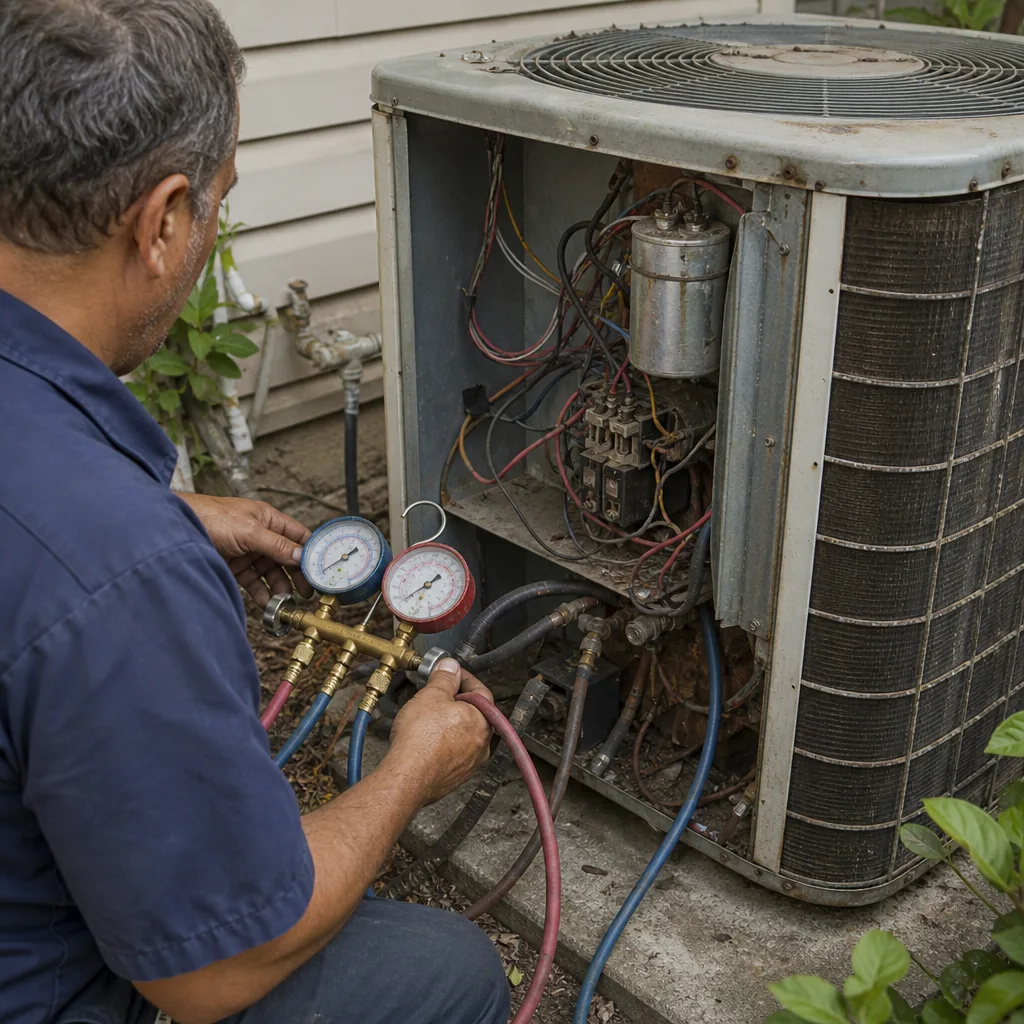 Before
 After
 Before
 After
 Before
 After